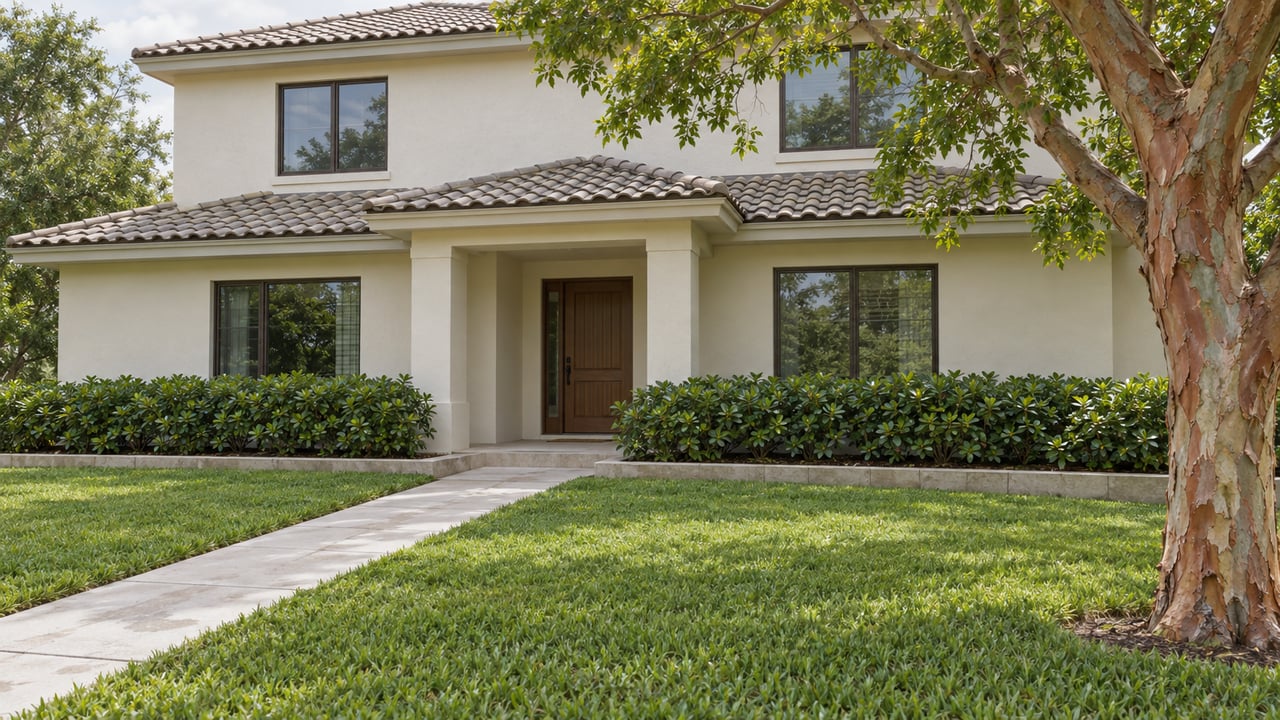
The Capital Contribution Line on Every Canyon Lakes Closing Statement
October 1, 2026
October 1, 2026
Somewhere between the loan estimate and the title company's final fee sheet, buyers closing on a home in Canyon Lakes run into a charge that never shows up in the online listing: a one-time Capital Contribution, priced at a quarter of the community's dues, paid to the homeowners association the day the deal closes. It isn't a junk fee tacked on by a title company. It's how this GL Homes community, built out between 2004 and 2009 along Lyons Road in West Boynton Beach, keeps its reserve fund solvent every time a home changes hands. Because it lives in the HOA's own transfer paperwork rather than the MLS sheet or the listing photos, it's the number that surprises buyers at the closing table and the number sellers forget to mention when they quote their monthly dues to a prospective buyer.
Canyon Lakes runs on roughly $325 a month in HOA dues, a figure that recent MLS-sourced listing data from mid-2026 still confirms. That monthly bill covers the guardhouse at the community's fountained entry, the resort-style pool, the fitness center, common landscaping, basic cable, and the private roads that wind through the community's 500 single-family homes. It is the number every buyer sees printed on a listing sheet and the number most agents quote when they talk about carrying costs.
The Capital Contribution is a different ledger entirely. It's assessed once, at closing, and it's calculated as a quarter's worth of the community's dues, a lump sum that goes straight into the association's reserve account rather than its operating budget. The distinction matters because reserve funds and operating funds serve different purposes under Florida homeowners association practice. Operating dues pay the light bill and the landscaper. Reserve funds pay for the roof over the clubhouse, resurfacing the tennis courts, and the capital projects that don't fit into a single year's budget. Every time a Canyon Lakes home resells, the incoming owner effectively re-funds that reserve account on behalf of the association, independent of whatever the outgoing owner already paid in monthly dues over the years they lived there.
For a buyer building a cash-to-close estimate, that means the number on the listing sheet is not the whole story. The Capital Contribution sits alongside the customary HOA estoppel and transfer charges that already appear on most Palm Beach County closing statements, adding a line item that's easy to miss if a buyer's agent isn't specifically pulling the association's transfer packet before writing an offer.
| Charge | When It's Paid | Who Pays | What It Funds |
|---|---|---|---|
| Monthly HOA dues | Ongoing, every month | Current owner | Guardhouse staffing, pool and clubhouse upkeep, common landscaping, basic cable |
| Capital Contribution | One-time, at closing | Incoming buyer | Reserve account for major repairs and capital projects |
| HOA estoppel and transfer fee | One-time, at closing | Negotiable, often the seller | Administrative cost of updating association records |
Seeing these three charges laid out separately is the point. A buyer who only budgets for the estoppel fee, because that's the line item every closing cost guide mentions, walks into the closing table short by a quarter's worth of dues they didn't see coming. A seller who only quotes the monthly dues figure to a prospective buyer, because that's the number they've paid for years, leaves out the one charge that actually determines whether the buyer's financing math holds up on the day of closing.
The reason associations in this part of Boynton Beach lean on quarterly assessments rather than a simple monthly draft becomes clear once you look at what happens when the rhythm breaks. One HOA over, in Canyon Isles, a sister GL Homes community sharing the same Lyons Road corridor and the same quarterly billing structure, court records reviewed by BocaNewsNow.com show a homeowner facing foreclosure in April 2026 over a balance that started as ordinary quarterly assessments of $1,280 and grew to roughly $3,800 by the time the association's attorney filed suit. Interest accrues at 18 percent annually, plus a $25 late fee, plus the attorney's own costs, all layered on top of the missed assessment itself. A January 2026 filing against a different set of homeowners in the same community followed an identical pattern: a missed quarterly payment, a notice of intent to record a lien, and a balance that reached roughly $3,800 once the lien was recorded.
"HOA fees and dues payments are not optional in Florida."
That's the framing BocaNewsNow used in its reporting, and it captures why the quarterly cadence matters more than it looks like it should. A monthly bill gives an owner twelve chances a year to catch a missed payment before it compounds. A quarterly bill gives four, and the gap between payments is wide enough that a single missed assessment can sit unnoticed for months before a Notice of Intent to Record a Claim of Lien arrives. The law firm handling the Canyon Isles cases, Wasserstein, P.A. of Boca Raton, and the management company overseeing collections, Castle Group, are named in the court filings themselves, which is a useful reminder that these aren't abstract association threats. They're standard collection processes run by real firms on a real schedule.
Canyon Lakes' own association, Canyon Lakes Homeowners Association, Inc., is a Florida not-for-profit corporation registered with the state since October 2003, with a named slate of officers on file, including a president, treasurer, and secretary. It is a professionally run board with the same authority under Florida homeowners association law to record a lien and pursue collection that its Canyon Isles counterpart has exercised. Nothing in the public record ties a foreclosure case to Canyon Lakes specifically. What the Canyon Isles pattern shows is how quickly a quarterly-assessment structure can turn a missed payment into a five-figure legal problem when it goes unaddressed, and that structural risk applies to any association in this corridor that bills on the same schedule.
A seller who has lived in Canyon Lakes for years and paid dues on autopilot rarely thinks to check whether every quarterly assessment posted correctly. Before listing, it's worth requesting a current estoppel letter directly from the association rather than relying on a dues figure quoted from memory or from a general listing site, since aggregator pages sometimes carry figures that are years out of date. An estoppel letter confirms the exact balance owed, any pending special assessments, and whether the account is in good standing, which protects the seller from a last-minute surprise at the closing table and gives the buyer's side accurate numbers to work with from the start.
Buyers get the more direct benefit from asking early. Requesting the HOA's transfer packet before finalizing a budget confirms the exact Capital Contribution amount, since it moves with the community's current dues figure rather than staying fixed year over year. It also confirms whether any special assessments are pending, since reserve funding for something like a clubhouse renovation could add to what's owed at closing beyond the standard quarter-dues contribution. A buyer's agent who pulls this paperwork before writing an offer, rather than after the contract is signed, gives a client room to negotiate who covers what instead of discovering the number for the first time on the settlement statement.
Does the Capital Contribution apply every time the home resells, or just on the first sale after construction? It applies on resale, not only on the original builder sale. Each time ownership transfers, the association collects the contribution again to keep funding the reserve account.
Is the Capital Contribution refundable if the buyer sells again a few years later? No. It's a one-time contribution to the association's reserve fund, not a deposit held on the buyer's behalf. The next buyer pays their own contribution when that sale closes.
If a seller has fallen behind on assessments, who's responsible for the balance at closing? Florida practice generally requires unpaid HOA balances to be cleared before or at closing, which is exactly what an estoppel letter is designed to confirm. A seller who addresses a shortfall before listing avoids negotiating it under pressure once a buyer is already under contract.
Where can a buyer verify the exact current dues and Capital Contribution amount? Directly from the association's management company through a transfer or estoppel request, since that figure changes as the community's budget changes and shouldn't be assumed from an older listing remark.
If you're weighing a purchase or a sale in Canyon Lakes and want the real numbers before you're standing at the closing table, Susan Bemis can help you pull the estoppel packet early and build a budget around what the association will actually charge, not just what the listing sheet shows. Let's Connect.
Stay up to date on the latest real estate trends.


Whether you are a first-time homebuyer, a seasoned investor, or looking to sell for top dollar, she is committed to delivering personalized service, expert guidance, and outstanding results. To Susan, you are never just another transaction—your goals are her top priority!