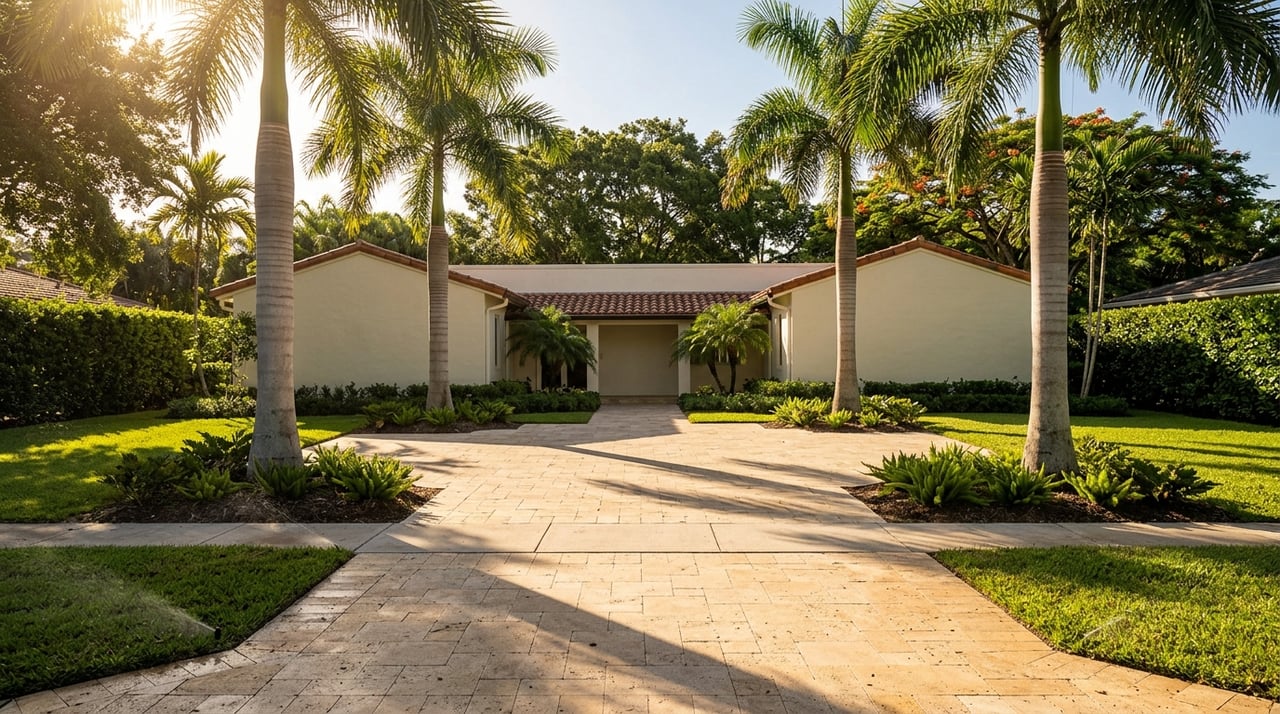
Why Equus Skips the Country Club Bill Everyone Else in Boynton Beach Pays
August 27, 2026
August 27, 2026
How much does it cost to join the country club at Equus?
It's the first question a lot of golf-community shoppers ask when they see the gated entrance, the two ten-acre lakes, the seven-thousand-square-foot clubhouse. It's also the wrong question. Equus doesn't have a country club to join. There's no initiation fee, no equity buy-in, no annual membership invoice that lands separately from your mortgage statement. For a community averaging well above $1.3 million per sale over the past year, that absence is the story.
Palm Beach County has no shortage of gated communities that bundle a lifestyle amenity into mandatory dues. Hunters Run, another Boynton Beach country club, requires every owner to carry at least a Social membership with room to upgrade to Golf/Racquet, backed by an initiation fee of roughly $60,000 (about 80 percent of which comes back on resale) and annual dues that run $10,000 to $15,000 depending on membership tier. That's on top of whatever the per-subdivision HOA charges across Hunters Run's 23 neighborhoods.
Equus runs a different model entirely. The community's HOA fee sits under $500 a month, a figure that looks almost out of place next to a trailing 12-month average sale price of $1,653,500 as of August 2026. There's no golf-equity structure to unwind, no membership tier to select, no six-figure buy-in due at closing.
| Equus | Hunters Run | |
|---|---|---|
| Community type | Gated equestrian estate community | Gated golf-equity country club |
| Mandatory club membership | None | Yes, Social minimum, upgradeable |
| Initiation fee | None | Roughly $60,000, about 80% refundable on resale |
| Annual membership dues | None beyond HOA | Roughly $10,000 to $15,000 |
| Monthly HOA/association fee | Under $500 | Set separately across 23 subdivisions |
| Signature amenity funding | Pay-as-you-use at the adjacent Equus Equestrian Center | Bundled into club dues across 54 holes |
The gap explains why two buyers with the same budget can land in wildly different carrying-cost situations depending on which gate they choose.
The reason Equus can skip the club structure is that its signature amenity was never built inside the HOA in the first place. The Equus Equestrian Center sits on land adjoining the community, a full-service boarding facility with roughly 100 stalls, competition rings, paddocks and a riding school offering both English and Western instruction. It's a working equestrian business, not a resident perk folded into your dues.
That means owning in Equus doesn't require owning a horse, and it doesn't require paying for one you don't have. Boarding, lessons and clinics are priced and purchased separately, the same way you'd pay a marina for a slip rather than assuming dock fees are baked into your HOA. Residents who ride do so along roughly five miles of trails inside the gates and can walk next door for lessons or boarding. Residents who never touch a saddle pay nothing extra for the fact that the amenity exists.
Compare that to a golf-equity club, where every owner funds the course whether they play nine holes a week or never picks up a club. Equus unbundled the lifestyle from the dues. That's the mechanism, not a coincidence of pricing.
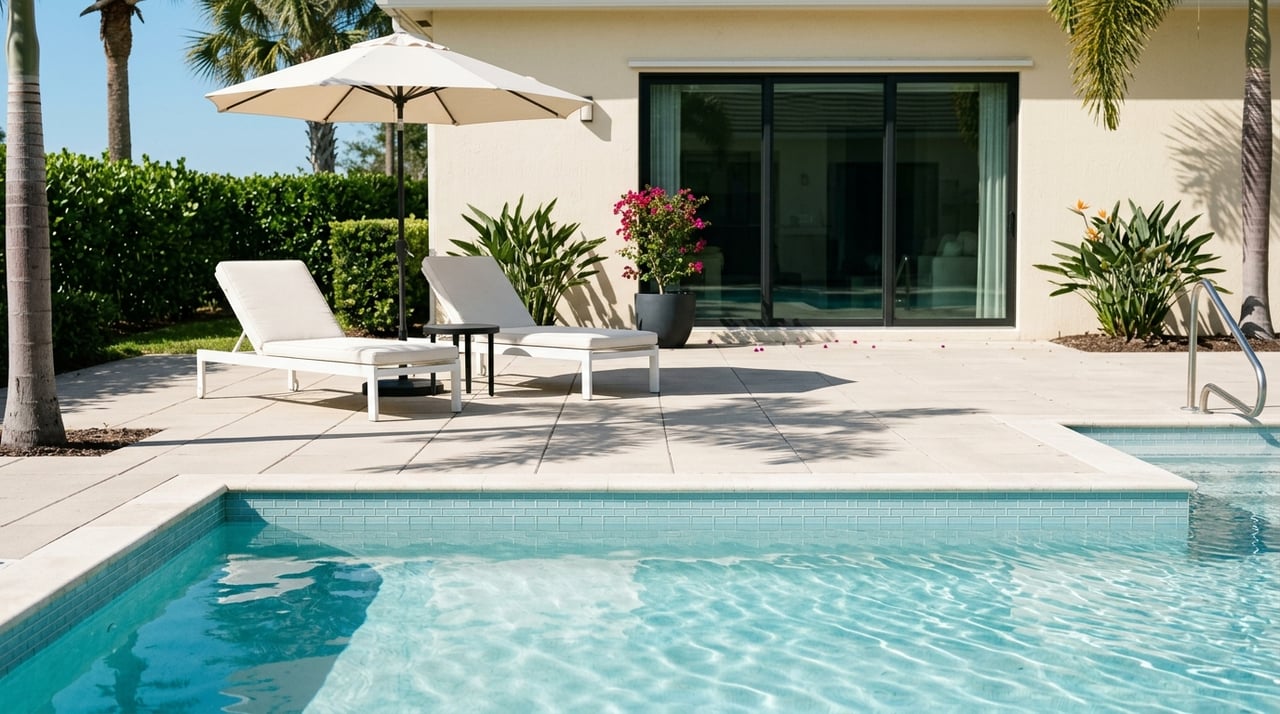
A sub-$500 HOA fee doesn't mean Equus skimps on shared space. The fee covers a 24-hour manned gate with roving patrol, common-area upkeep across the community's 280 homesites, and access to the clubhouse itself: a resort-style pool and spa, fitness center, two Har-Tru tennis courts, and a billiards room, all of it built to overlook the equestrian center next door rather than a fairway.
What the fee doesn't cover is the thing a golf club's dues exist specifically to fund: turf maintenance, irrigation, a pro shop, a grounds crew keeping 18 or 54 holes playable year-round. Equus was never built around a course, so there's no course-sized budget line hiding inside the number. The comparison to Hunters Run isn't really apples to apples. It's a community that chose not to build the most expensive amenity in South Florida real estate and priced its dues accordingly.
Here's where a buyer relying on portal averages runs into trouble. Two separate trailing-12-month pulls from local MLS data, one dated August 2026 and one dated May 2026, both counted 12 closed sales in Equus. But the average sale price moved from $1,427,000 to $1,653,500 between those two snapshots, and the average days on market shifted from 135 to 94.
That's not a market swinging wildly month to month. It's a sample size doing what small sample sizes do. Twelve sales spread across 280 homes means every single closing moves the average meaningfully. A $2.5 million waterfront estate closing in one month can shift the mean by six figures in a data set that thin. Anyone using a generic portal snapshot to gauge Equus pricing is really just looking at whichever handful of homes happened to close before the last refresh. The fix isn't to distrust the averages entirely, it's to ask for a current pull tied to a specific closing window rather than trusting whatever number a site happened to cache.
Closed sales over the past year give a clearer picture than any single average. Listings on Equus Circle closed with asking prices ranging from roughly $999,000 to $1.8 million between mid-2025 and mid-2026, while a home on Three Rail Drive listed at $1,749,000 in October 2025. Active inventory as of August 2026 runs from roughly $1.7 million to $2.3 million, with five homes on the market at that snapshot.
The spread inside that range comes down to condition and lot placement more than square footage alone. In 2022, per-square-foot pricing in Equus ranged from the $370s to just under $500, a spread the data itself flagged as a 30 percent variance within the same 280-home footprint. A renovated home on a lake or preserve lot commands a real premium over a comparable interior lot that hasn't been updated. In a community this size, walking the street matters more than reading the community-wide median.
Do I have to own a horse to live in Equus? No. The Equus Equestrian Center operates as its own business next door. Boarding, lessons and trail access are available to residents who want them, but nothing in the HOA structure requires participation.
Does a low HOA fee mean thinner reserves? Not necessarily. The fee reflects what it's funding: a clubhouse, pool, tennis courts and a security gate, not a golf course. A useful comparison isn't the dollar figure alone but what each community's dues are actually paying for.
What does entry-level pricing look like right now? As of August 2026, active listings in Equus run from roughly $1.7 million to $2.3 million, with a trailing 12-month average sale price of $1,653,500. Given how few sales close in a given year, current pricing is worth confirming against a fresh MLS pull rather than a cached listing site.
If you're weighing Equus against a golf-equity club elsewhere in Boynton Beach, the decision usually comes down to how you actually want to spend your time and your dues. Susan Bemis works this stretch of Palm Beach County regularly and can walk through current inventory, recent closings by street, and how the numbers compare across nearby communities. Let's Connect.
Stay up to date on the latest real estate trends.
Whether you are a first-time homebuyer, a seasoned investor, or looking to sell for top dollar, she is committed to delivering personalized service, expert guidance, and outstanding results. To Susan, you are never just another transaction—your goals are her top priority!